Category: Literature

The Hottest Dishes of the Tartar Cuisine: Soviet woes, immigrant angst, and women of steel

The Hottest Dishes of the Tartar Cuisine: Soviet woes, immigrant angst, and women of steel

The Hottest Dishes of the Tartar Cuisine, by the immensely talented and shockingly young Alina Brodsky, is just terrifying. And hilarious. And so outrageously similar to my own Soviet PTSD childhood that if I am ever fortunate enough to meet the author I’ll be sure to give her a suffocating hug and charm her into sharing a steaming hot cauldron of plov (look it up – it’s delicious, all that lamb and raisins and rice, mmm).

So what do we have in these 200-odd pages of tragicomedy… At the center of it all, in the middle of perestroika, the rationing and the bread lines, amid the collapse of cosmopolitan Soviet identity and a still birth of the old-new Tartar ethos, in the very throbbing nucleus of all this apocalyptic soup, there stands a Woman. In fishnet stockings and red lipstick. A narcissist, a stakhanovite, a gold-digger, an abusive mother and a loving grandmother, a shitty wife and a strangely charismatic lover, a master puppeteer and a savoury sex object with special popularity among  pasty-white and sometimes rich Westerners. Her ability to bombshell the lives of everyone around her is phenomenal, just like the depth of her sadomasocistic love for the very people she poisons, like a slowly seeping nuclear reactor. She is the penultimate Cronus, the mythical Greek god who devours his children out of fear and jealousy. A Cannibal-Mother that charges some hefty interest for giving you life, so hefty, in fact, that she chooses to repossess her selfless gift while her offspring writhes in pain and gasps for air. Freud would inevitably roll his eyes and sigh predictably.

She survives through all historical cataclysms that befall her generations (from being a post-war orphan to witnessing the death of the Soviet empire) with the grace of a swan and the evolutionary prowess of a cockroach. There’s a popular saying that characterizes the enduring strength and kamikaze courage of a Russian woman: she can “stop a galloping horse and run into a burning house.” Our main heroine is capable of that and more: bribery and extortion, homemade abortions, making preserves, contraband, forcing men to marry one’s daughter, immigration, Yiddish food, Tartar food, Russian food, breaking up marriages, driving German cars, flirting with ski instructors, and living, always living through it all with clenched fists and snapping teeth, always pushing through obstacles in classically Darwinian fashion.

Nothing is off-limits in this book, because nothing is off-limits in real life. The worst thing that can happen will happen, and no amount of good graces with God, Karl Marx, or Uncle Sam will ward off the corrosive stench of failure. Our characters, oscillating between Tartar and Soviet identities, pilgriming to the better side of the Berlin Wall in search of McDonald’s and bubble gum, all come off of the totalitarian conveyor belt with a potent “tough life” vaccine. Will it be strong enough to preserve them against the infections of the Western kind? Do you get a rationing card for your very own Happily Ever After once you cross that international border? Might as well spit three times over your left shoulder for good luck because, as the Russians say, “free cheese can be found only in mousetraps.”

Now, I may have painted a bleak landscape, but don’t get me wrong, the stuffing is, nevertheless, pure hilarity. We are treated to hours of laugh-out-loud humour, inappropriate, disturbing, awkward, and downright messed up. Don’t laugh too hard though for, as the darling Russians caution, “laughter without reason is a sign of imbecility.” Keep it dignified, keep it on the DL.

Image: Candidate for the beauty contest. Riga, 1988. 
Eric-Emmanuel Schmitt: Moral fables for the difficult world

Eric-Emmanuel Schmitt: Moral fables for the difficult world

Why would someone bequeathe their entire fortune to an absolute stranger? Why would someone keep on buying a dog of the same breed and call them the same name, over fifty years’ span, only to end their life a day after the unfortunate canine gets fatally hit by a car? Why would a husband swell with obsessive veneration of his wife’s ex, to the point of insisting that she re-take her former spouse’s surname? Why would a couple suddenly fall out of love upon getting rescued from a snowy cave by a young girl with cystic fibrosis? Random questions, mystical answers, elegant plot twists, and an obligatory moral lesson – all this neatly packaged in four short stories gathered under the kind of title glancing upon which could surely elicit a number of fatigued eye rolls from early-morning subway commuters. Invisible Love.

From a title like this one expects something saccharine, something romantic and sufficiently sentimental. And yes, there’s plenty of nostalgically wistful moments in this Franco-Belgian prose that make one sigh and recollect tender childhood moments of hot cacao on Sunday mornings. Yet Eric-Emmanuel Schmitt, with his numerous European literary regalia, does his readership one better and, in four tales of mystery, fantasy, and romance, paints relatable revelations about human character, each wrapped into a poignant moral parable.

The first tale, Two Gentlemen from Brussels, is about the evolution of marriage in the microcosm  of two very different families whose trajectories were brought together through sheer coincidence. They both got married on the same day, in the same church, except one couple enjoyed the hefty benefit of state, ecclesiatic, and societal recognition, while the other, consisting of two men, had to cherish their love in secret and to whisper their modest “I do’s” in a delicate echo to the first couple’s loud proclamations. Two families secretly bound, two vasty contrasting fortunes, and yet, in Life’s insufferably sarcastic snark, both come to roughly the same educational conclusions as their journeys approach that final sunset. Loving is difficult and sometimes destructive, yet we march on, like tired soldiers under a weathered banner, for better or worse, for richer or poorer…

The second tale, The Dog, is just sad. A man and his dog, a symbiosis to which multiple praises were sung over the centuries. A Nazi concentration camp survivor and his only friend, his canine friend, emerge as epitomes of endurance and devotion. They persevere, like spring’s first flowers, through food shortages, violence, and even in death, inspiring those they left behind to go on living and loving, drinking good whisky and hurriedly making love.

Ménage a Trois, aptly, comes third and tells of a frustrated, impoverished widow in the last days of her bloom, earnestly endeavouring to gold-dig her way out of misery and into the upper-middle (at the very least) stratum. She procures a requisite specimen, a Danish diplomat, who propels her into precisely the kind of luxury she dreamt of. It’s perfect, except there’s one tiny little thing. The Dane is obsessed with her ex-husband, or rather his music, looking to publish it, to celebrate it, to commemorate the composer, to elevate the dead relation into the ranks of national heritage, pushing his new wife deeper into the throes of this macabre joke. We do find out who the composer is at the end of the story  – he’s really famous and really real, and suddenly the story makes excellent sense. The moral takeaway, nonetheless, is blatantly clear: you can never really bolt the door to your past, no matter how expertly you barricade it from unwelcome intruders.

Finally, The Ghost Child is as banal as it is psychologically acute. A success-studded model family and their never-healing, scarlet-red stigmata – a child, a hope of a child, a ghost of a child, a barren memory of a child. What happens when individuals used to perfection are suddenly  thrown into a throbbing cauldron of defective chaos imposed in a cruel dictum of chromosomes, genetic disorders, the whimsies of DNA? Can modelesque bodies, enviable careers, and vacations in the Alps overpower the terrible stench of doubt, disappointment, and loss? When all manner of puppet theatre becomes futile, how does one “keep calm and carry on”? Fate can have the snarkiest of humours, which is what our perfectionist characters discover, in a fairy uncomfortable experience. The lesson? No matter what decision you make, however educated, however reasoned, Life will always find a way to get the last laugh. Be prepared, if you can.

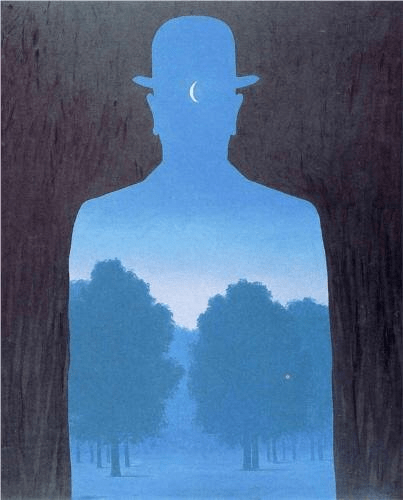
Image: Rene Magritte, A Friend of Order 


Ali Smith’s Autumn: a song for Brexit times

Ali Smith’s Autumn: a song for Brexit times

This novel ticks all the literary establishmentarian boxes: Reactionaries vs Progressives. Cosmopolitanism vs Isolationism. Sexual diversity. Feminism. Millenials against the World. All the trendy stuff. All the relevant, resonant, apt, and timely ingredients of Britain’s first “post-Brexit novel,” written hastily after that fateful referendum the results of which will continue dictating much of the political, economic, and cultural discourse for years to come.

And yet none of the above are reasons for why Autumn is a good novel. In fact, all of the above may become potent deterrents for swathes of potential readership hailing from the other side of the political barricades. We are, after all, damned with rotten luck to live in the age cleft in two throbbing wounds of populism and polarization.

Autumn is good not because of its political regalia. Autumn is good in spite of it. It’s good because of masterful narrative control, because of its intensely intimate third-person style, because of its seemingly effortless sardonic wit served up amongst bursts of genuine kindness, because of free-flowing sentences worthy of Virginia Woolf, because it spins the thread of chronological time like a 90’s kid a yo-yo.

And I haven’t even paid tribute to the core story, a tender friendship between a 30-something art scholar Elisabeth and David, a centenarian with bitter experience of Europe’s darkerst hours. As the latter tumbles from moments of sweet clarity into later-life necrosis and back, the former navigates mundane familiarities of our modern life, with its absurd bureaucracy, housing crisis, uninspired academic advisors and, above it all, the macabre shadow of once-in-a-generation political uncertainty. The historical parallels drawn between the world of Elisabeth and that of David’s continental European youth are so crudely obvious they can probably be seen from space. Yes, we get it, things are bad, thing will likely get worse:

“It is like democracy is a bottle someone can threaten to smash and do a bit of damage with. It has become a time of people saying stuff to each other and none of it actually ever becoming dialogue. It is the end of dialogue.”

And now, for a striking image of obviously Trumpian foreboding:

“All across the country, the country was divided, a fence here, a wall there, a line drawn here, a line crossed there,

a whole new line of fire,

line of battle,

end of the line,

here/there”

Ali Smith builds a cautionary landscape of walls, lines, demarcation, otherness, the full collection of unmistakable warning signs, but if she were to stop at that Autumn would be nothing more than a prettily worded pile of trendy banality.  Smith does one better and offers hope, nesting right there, in our everyday language, in our words, the potency of linguistic creation:

“Language is like poppies. It just takes something to churn the earth round them up, and when it does up come the sleeping words, bright red, fresh, blowing about. Then the seedheads rattle, the seeds fall out. Then there’s even more language waiting to come up.”

Language can make and un-make regimes, empires, civilizations, the entire LEGO set humanity so scrupulously built. What’s one wee Brexit in this grander context. Dandelion fuzz, nothing more. As Daniel the centenarian puts it:

“Whoever makes up the story makes up the world. So always try to welcome people into the home of your story. That’s my suggestion.”

If there’s charm in this little book it is precisely this – finding comfort, stability, and reassurance in eternal, human, and natural things. All political neurosis aside, Autumn is a desperate search for primeval safety in turbulent times.

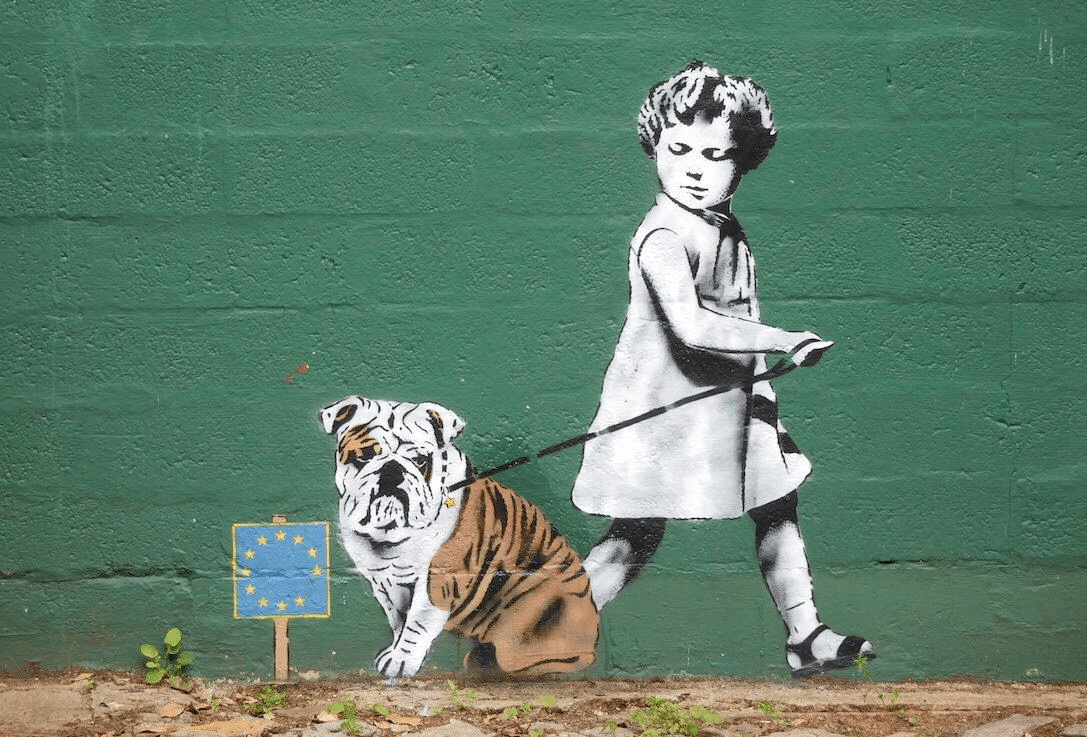
Image: a graffiti in Bristol, courtesy of Twitter. 

On Stefan Zweig, the Soul of Europe

On Stefan Zweig, the Soul of Europe

“You see? There are still faint glimmers of civilization left in this barbaric slaughterhouse that was once known as humanity.”

These juicy musings are not to be found in Stefan Zweig’s opulent literary oeuvres. They belong to Wes Anderson’s adorably melancholy bon vivant Gustave H., the gentle connoisseur of life under the velvet curtains of Grand Budapest Hotel. It’s an institution, the Hotel and the film itself, inspired by the immortal works of Stefan Zweig, as is carefully noted in the film’s credits. Anderson pays tribute to an Auteur (much like himself, of course), a historiographer, a novelist, an essayist, the most popular and celebrated literary superstar of the first half of 20th century. Back then Zweig’s name was on the lips of everyone, from the stuffy halls of his darling Vienna, to the roaring bowels of literary Paris (Britain, I think, was the only notable geographic exception. Ever the Brexiteers, then as now).

Zweig’s luxuriously opulent writing style is akin to the fluffiest profiteroles gently melting on the tip of one’s tongue. Zweig takes any subject, time period, or historical persona, and delivers delicious page-long paragraphs of philigreed prose, so overwhelmingly, shockingly beautiful that you might catch yourself re-reading some suave little phrase depicting Casanova’s syphilitic wounds or Nietzsche’s migraines countless times, delighting in the sheer beauty and grace of the nouns, verbs, and adjectives laid out before you on the page. Such skill and beauty could bring tyrants to their knees. Alas… Zweig’s books failed to charm that one particular tyrant of his age, Hitler, and so his books, among other literary diamonds and other, smaller gems, were sentenced to be burned at the stake, in those infamous book burning barbarities of the nazi epoch.

So why is Zweig the soul of Europe? Surely, not just because of his literary calisthenics?

Focusing on Zweig’s essays (his short stories and biographies of famous people deserve a separate discussion), it’s apparent that his great hope for a united, supranational Europe, his incessant belief in humanity’s potential, is always tainted with insurmountable sadness and fatherly disappointment with the sorry state of affairs in this rabid, galloping, sleepless world. After the unparalleled disaster of the First World War Zweig wonders: this time around, when the storm clouds gather, when the war trumpets sound again, will Europe destroy itself completely?

Zweig is the faithful guardian of the three thousand year old treasure chest of European civilization. He serenades its culture and argues with passion that Europe’s most brilliant epochs were when it allowed for a free exchange of people and ideas. The liberal genius of the Renaissance, he muses, was killed off by the competitive isolationism of Reformation, much like the glorious openness of Rome was laid waste by the fratricidal squabbles of the Dark Ages.

Zweig marvels at all that the people of the continent were able to achieve, this glimmering Tower of Babel, now lying half-in-ruins, half-abandoned, the grand construction halted on account of petty nationalist fervour eating away, like rust, at its foundations.

“This is the monstrous moment we are living through today. The new Tower of Babel, the great monument to the spiritual unity of Europe, lies in decay, its workers have lost their way. Still its battlements stand, still its invisible blocks loom over a world in disarray, but without the communal effort to keep the work going it will be entirely forgotten, just like the other in the time of myths.”

In this and his many other essays written after the First World War and just as the tanks and the boots were being polished for the Second, Zweig calls for, essentially, the European Union, a supranational entity where people are free to move around and collaborate, a potent antidote to future wars, a golden crown fit for this reverend continent to wear. He speaks of Europe where a Slovakian worker and a Norwegian fisher would partake in a lively exchange of ideas, in a kind of a socialist conference, where good thoughts are as plentiful as canapés or shrimp cocktails. It is through the free flow of ideas (and goods and services, of course) that the soul of Europe could finally be chiseled out of its beautiful yet lifeless torso. But hurry, Zweig cautions, hurry to muster that courage, that spirit, that will, for the hellmouth of war is about to open once again. And here we see Anderson’s Gustave H wagging his Ralph Fiennes alabaster finger and blasting that memorable bit about the “slaughterhouse of humanity…”

The parallels with political, social, philosophical, and economic dilemma plaguing Europe today are blatantly obvious. What do we have on the menu today? Eurofatigue, euroskepticism, Brexit, assorted ultra-right characters, the migrant crisis, Putin’s dead eyes, and a nasty gut feeling of something wicked on the horizon. The socio-political air smells of gunpowder, and only a barely palpable veil of ignorance masked as respectability parts us from something awful.

Zweig did not survive that darkest hour and killed himself in 1942 in Brazil, where he fled earlier, bidding a sad adieu to his European motherland. In his infinite sadness, he just narrowly missed the hopeful turn of the tide with the Americans joining in the war efforts. He also missed the Marshall Plan and the founding of the EU. I cannot help but think he would have become some kind of an official EU arts dignitary, a Mozart of Brussels bureaucrats, the Eternal Euro-Optimist, the Classical Globalist with a gorgeous writing style…

In his essay History as a Poetess, Zweig describes history as “the workshop of God,” where dates and figures are only made meaningful by the poetic authority of those who transmit them:

“History only lives where it achieves a certain poetic grandeur, which is why the highest accomplishment of a people is to transform as much of its national history into world history as possible, its private people’s myth into a world myth.”

This view of history is that very “faint glimmer of civilization” our friend Gustave H speaks of in the film, right before he gets punched in the face by a throng of Nazi-esque police-thugs. And so the best of humanity, like Gustave, like Zweig, like countless others across continents, tirelessly labour on turning their little myths into the heritage of the world, dismantling walls, stretching out hands, and re-building that proverbial Tower of Babel.

I leave you with Zweig’s best essays:

  1. The Sleepless World
  2. The Tower of Babel
  3. History as a Poetess
  4. European Thought in Its Historical Development
  5. The Unification of Europe
  6. In This Dark Hour

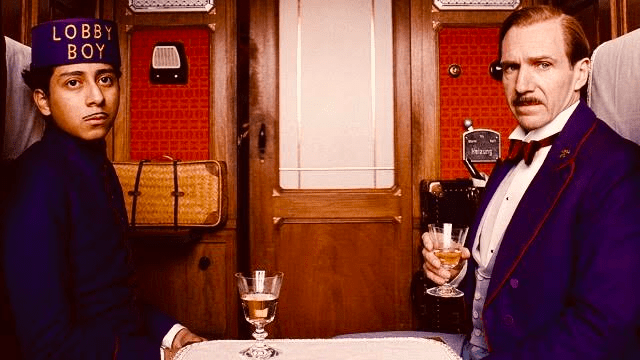
Image: a still from The Grand Budapest Hotel, 2014