Category: Uncategorized

On Stefan Zweig, the Soul of Europe

On Stefan Zweig, the Soul of Europe

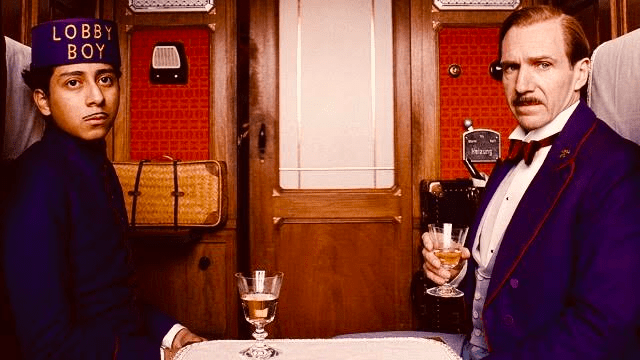
“You see? There are still faint glimmers of civilization left in this barbaric slaughterhouse that was once known as humanity.”

These juicy musings are not to be found in Stefan Zweig’s opulent literary oeuvres. They belong to Wes Anderson’s adorably melancholy bon vivant Gustave H., the gentle connoisseur of life under the velvet curtains of Grand Budapest Hotel. It’s an institution, the Hotel and the film itself, inspired by the immortal works of Stefan Zweig, as is carefully noted in the film’s credits. Anderson pays tribute to an Auteur (much like himself, of course), a historiographer, a novelist, an essayist, the most popular and celebrated literary superstar of the first half of 20th century. Back then Zweig’s name was on the lips of everyone, from the stuffy halls of his darling Vienna, to the roaring bowels of literary Paris (Britain, I think, was the only notable geographic exception. Ever the Brexiteers, then as now).

Zweig’s luxuriously opulent writing style is akin to the fluffiest profiteroles gently melting on the tip of one’s tongue. Zweig takes any subject, time period, or historical persona, and delivers delicious page-long paragraphs of philigreed prose, so overwhelmingly, shockingly beautiful that you might catch yourself re-reading some suave little phrase depicting Casanova’s syphilitic wounds or Nietzsche’s migraines countless times, delighting in the sheer beauty and grace of the nouns, verbs, and adjectives laid out before you on the page. Such skill and beauty could bring tyrants to their knees. Alas… Zweig’s books failed to charm that one particular tyrant of his age, Hitler, and so his books, among other literary diamonds and other, smaller gems, were sentenced to be burned at the stake, in those infamous book burning barbarities of the nazi epoch.

So why is Zweig the soul of Europe? Surely, not just because of his literary calisthenics?

Focusing on Zweig’s essays (his short stories and biographies of famous people deserve a separate discussion), it’s apparent that his great hope for a united, supranational Europe, his incessant belief in humanity’s potential, is always tainted with insurmountable sadness and fatherly disappointment with the sorry state of affairs in this rabid, galloping, sleepless world. After the unparalleled disaster of the First World War Zweig wonders: this time around, when the storm clouds gather, when the war trumpets sound again, will Europe destroy itself completely?

Zweig is the faithful guardian of the three thousand year old treasure chest of European civilization. He serenades its culture and argues with passion that Europe’s most brilliant epochs were when it allowed for a free exchange of people and ideas. The liberal genius of the Renaissance, he muses, was killed off by the competitive isolationism of Reformation, much like the glorious openness of Rome was laid waste by the fratricidal squabbles of the Dark Ages.

Zweig marvels at all that the people of the continent were able to achieve, this glimmering Tower of Babel, now lying half-in-ruins, half-abandoned, the grand construction halted on account of petty nationalist fervour eating away, like rust, at its foundations.

“This is the monstrous moment we are living through today. The new Tower of Babel, the great monument to the spiritual unity of Europe, lies in decay, its workers have lost their way. Still its battlements stand, still its invisible blocks loom over a world in disarray, but without the communal effort to keep the work going it will be entirely forgotten, just like the other in the time of myths.”

In this and his many other essays written after the First World War and just as the tanks and the boots were being polished for the Second, Zweig calls for, essentially, the European Union, a supranational entity where people are free to move around and collaborate, a potent antidote to future wars, a golden crown fit for this reverend continent to wear. He speaks of Europe where a Slovakian worker and a Norwegian fisher would partake in a lively exchange of ideas, in a kind of a socialist conference, where good thoughts are as plentiful as canapés or shrimp cocktails. It is through the free flow of ideas (and goods and services, of course) that the soul of Europe could finally be chiseled out of its beautiful yet lifeless torso. But hurry, Zweig cautions, hurry to muster that courage, that spirit, that will, for the hellmouth of war is about to open once again. And here we see Anderson’s Gustave H wagging his Ralph Fiennes alabaster finger and blasting that memorable bit about the “slaughterhouse of humanity…”

The parallels with political, social, philosophical, and economic dilemma plaguing Europe today are blatantly obvious. What do we have on the menu today? Eurofatigue, euroskepticism, Brexit, assorted ultra-right characters, the migrant crisis, Putin’s dead eyes, and a nasty gut feeling of something wicked on the horizon. The socio-political air smells of gunpowder, and only a barely palpable veil of ignorance masked as respectability parts us from something awful.

Zweig did not survive that darkest hour and killed himself in 1942 in Brazil, where he fled earlier, bidding a sad adieu to his European motherland. In his infinite sadness, he just narrowly missed the hopeful turn of the tide with the Americans joining in the war efforts. He also missed the Marshall Plan and the founding of the EU. I cannot help but think he would have become some kind of an official EU arts dignitary, a Mozart of Brussels bureaucrats, the Eternal Euro-Optimist, the Classical Globalist with a gorgeous writing style…

In his essay History as a Poetess, Zweig describes history as “the workshop of God,” where dates and figures are only made meaningful by the poetic authority of those who transmit them:

“History only lives where it achieves a certain poetic grandeur, which is why the highest accomplishment of a people is to transform as much of its national history into world history as possible, its private people’s myth into a world myth.”

This view of history is that very “faint glimmer of civilization” our friend Gustave H speaks of in the film, right before he gets punched in the face by a throng of Nazi-esque police-thugs. And so the best of humanity, like Gustave, like Zweig, like countless others across continents, tirelessly labour on turning their little myths into the heritage of the world, dismantling walls, stretching out hands, and re-building that proverbial Tower of Babel.

I leave you with Zweig’s best essays:

  1. The Sleepless World
  2. The Tower of Babel
  3. History as a Poetess
  4. European Thought in Its Historical Development
  5. The Unification of Europe
  6. In This Dark Hour

Image: a still from The Grand Budapest Hotel, 2014
Notable Children’s Authors Unbeknownst to the Anglosphere. Part 3.

Notable Children’s Authors Unbeknownst to the Anglosphere. Part 3.

Epigraph's avatarEpigraph.

As I am typing out these words (on a touchscreen keyboard, no less! Woe betide all couch potato writers too lazy to replace their iPad keyboard batteries), my thoughts frantically scatter over the numerous giants of children’s literary thought that deserve opulent praise and thorough study. That’s Michael Ende and his Jim Button stories; that’s Croatia’s Ivana Brlic Mazuranic and the Brave Adventures of Hlapic the Aprentice; that’s Bozena Nemcova and her Grandmother or the deliciously enchanting Three Nuts for Cinderella. These are all masterpieces in their own right, bedazzled with awards, commemorative stamps, monuments, and feature films produced in their honour.

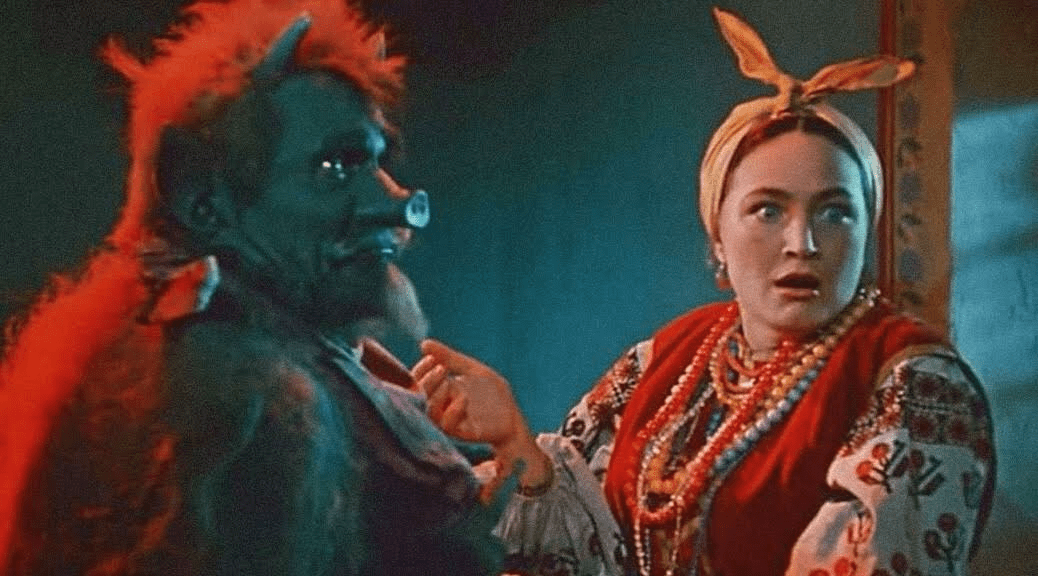
I’d like, however, to allot the remaining two slots on my list to the proverbial dark horses: one, a Soviet “variation on the theme of” to L. Frank Baum’s The Wonderful Wizard of Oz. The other is a fantasy classic that, in my opinion, asks…

View original post 700 more words

Notable children’s authors unbeknownst to the Anglosphere: Part 1.

Notable children’s authors unbeknownst to the Anglosphere: Part 1.

It has always outraged me how readers in the English-speaking world are wickedly deprived of easy access to international literature, especially the works being translated from other languages. What a crying shame, and what injustice! The “Rest of the World” more often than not enjoys a far more comfortable literary vantage point, its reading menu deliciously diverse, while the audience in the Anglosphere is scandalously deprived (although they don’t know it so they’re not typically pissed off). Well, I know it (thank you, Eastern European upbringing!) and I am pissed off, so here is my modest David to the book industry’s behemoth of a Goliath. First, I’ll tackle the young’uns. And so, without further ado, here’s the list of some notable children’s books authors and their most dear works, which I wholeheartedly believe deserve an honourable spot in those budding minds and hearts via systematic inclusion of these literary gems into our sterile, uninspiring, colossal-waste-of-time scholastic curriculum.

1. Astrid Lindgren.

Where do I even start… Astrid Lindgren, that beloved daughter of Sweden, has given us so much more than Pippi Longstocking. I particularly recommend:

Karlsson-on-the-Roof. Karlsson is a middle-aged, potbellied, and boastful little man who lives somewhere in the vicinity of a chimney in the perfectly ordinary apartment building in Stockholm. Forgot to mention: he has a little propeller on his back which enables this Pillsbury poster boy-lookalike to fly, navigating the Scandinavian city landscape and its stucco roofs and the occasional pointy gothic cathedral. Karlsson, for all his lovably curmudgeonly ways, befriends a kiddo, a boy named Svante, a child a lot less self-confident than his pudgy new friend. The pair’s adventures, antics, and mutual Bildung ensue, as at the grand finale both emerge the kinder, stronger, more mature versions of themselves.

Mio My Son. Bo, a boy distinctly unloved by his adoptive parents, one day discovers that he is, in fact, a son of a kind and benevolent king of a magical land far, far away. In his rediscovered motherland Bo, now called Mio, has a remarkably loving and charismatic father, a beautiful white horse, a new best friend, and wonderfully hospitable subjects who treat him to snacks, hugs, and entertainment. Alas, the boy must become a man by battling the evil knight Kato who kidnaps and imprisons the kingdom’s children in his ghastly castle of fire and ice. This is a story filled to the brim with love and the inescapable necessity of sacrifice on the path to a fulfilling and meaningful existence.

2. Selma Lagerlof.

Another Swede, Selma Lagerlof was a suffragette, an anti-fascist, and the first female writer to win the Nobel Prize in Literature, in 1909. Her most well-known and internationally beloved work (it’s so popular in Sweden that the main character is immortalized on a Swedish banknote) is one I heartily recommend below:

Niels and the Wild Geese. This is a tale of adventures, magic, ethics, humility, and the peculiar joys of growing up. Niels is a disobedient young rascal with no respect for his parents and a somewhat sadistic attitude to the animals on the farm where he lives. In the best folk tale traditions, Niels insults a tomte (a Swedish version of a hob, a grumpy house creature that loves to trick or punish silly boys and young maidens). Tomte shrinks him to the size of a thumb. Niels, now reverse-bullied by the suddenly giant farm animals, flees with a flock of migrating geese, and thus a journey ensues, a geographic dance across the wonderfully diverse Sweden, peppered with curious encounters with other animals, talking monuments, sad young men in lonely cities, and the king of Sweden himself. At the end, the geography lesson is learned and the sinner is reformed, while the vivid memories of Niels’ adventures still stay with me, decades later.

3. Gianni Rodari.

An Italian communist and a recipient of the prestigious Hans Christian Andersen Medal for children’s literature, Rodari was a prolific and brilliant author, his writing intelligent, funny, insightful, and filled with love of all things Childhood. I would like to recommend not one, not two, but FOUR of Rodari’s works, starting with…

The Adventures of the Little Onion. Cipollino is said little onion, a fun-loving, quirky boy living an impoverished yet happy life with his assorted vegetable friends and their pompous and cruel upper-class fruit overlords; their town is plagued by oppression, inequality, and other class problems (this book was a massive in the Soviet Union – you can see why). But ideology aside, Cipollino’s adventures teach solidarity and courage against injustice in many heroic acts: there are the hilarious pranks on Count Orange, duchesses Cherries and their assorted sellout brown-nosers, the busting of the vegetable political dissidents out of prison, a bloodless revolution and the penultimate triumph of the callus-stemmed vegetariat. Cipollino is, essentially, Harry Potter, the chosen boy that dethrones a despot and his odious regime of injustice.

The Blue Arrow. What could be better than a toy store? A toy store during Christmas, of course. Alas, its adorable residents think otherwise. They long to end up in the arms of children, but not the whiny, insufferable, spoiled brats who have it all but still twist their parents’ arms for more. No, the toys yearn for the little hands of the poor children whose parents, toiling daily for that proverbial slice of bread and a drink of water, could never afford fancy toys from the city’s preeminent toy store. The solution is glaringly obvious – the toys board the Blue Arrow, an elegant little toy train, burst out of the store on one fateful and opulently snowy winter night, and venture on a peregrination across the city. They encounter kindness, heartkbreeak, loneliness, poverty, danger, and, ultimately, the pure, undistilled joy that comes with bring a miracle during the most miraculous time of the year. Read this story to the children in your life if you want to cultivate compassion, generosity, and humility.

The Cake in the Sky. One morning, ordinary citizens of an ordinary Italian town, chained to their monotonous jobs, traffic, chores and other joyless mediocrities, wake up, scratch their butts and, mid-yawn, realize, to their shock, awe, and outrage, that there’s an unandentified flying object taking up half of their boring old sky. Firefighters, policemen, and scientists are brought in, helicopters and cannons are out. But one little boy and his grandfather conduct their own investigation and are first to discover that the UFO is a delicious cake. Little by little, the grumpy city-dwellers shed their balls, chains, and facades, stripping away the suffocating burden of adulthood. What emerges? The return to innocence, steeped in laughter, hugs, ice cream, chocolate, and fruit syrup. And above all that, the pink apparition of Childhood, for whose warm embrace we all yearn.

Fairy Tales Over The Phone. Imagine yourself, a parent on a business trip, stuck in some hotel with severe-looking curtains and positively depressing wallpaper. Your daughter, far away back home in her adorable pajamas, is expecting a bedtime story which you are tasked with delivering, business trip or no business trip. Mind the fact that this is the 50s so you must do it telephonically, and inter-city calls, put through by cute girls with massive headphones covering their delicate ears are obscenely expensive. You must entertain your daughter effectively in a couple of minutes or less. Go! Gianni Rodari presents us with a precious string of such short stories, each funnier than the previous one, guaranteed to have both the teller and the recipient laugh their toes off (and then dutifully fall asleep, one on her adorable bed, the other in the designer stillness of a business suite).

Part two of my list to follow shortly. 

Image: Still from Karlsson on the Roof film (1974).

The Epigraph to the Whole Thing

The Epigraph to the Whole Thing

Greetings.

The great Canadian literary critic Northrop Frye once decorated a work of his with the following epigraph: “Teaching literature is impossible; that is why it’s difficult.” This delicious aporia, this classic philosophical impasse, is just one of the myriad reasons for venerating Frye and his elegant tweed jackets. Quotations, alas, must always be taken out of context, for such is their sad, kitschy purpose in our soundbite-infested world. We slap them into university papers to help reach the required word count, we stick them into high-octane business presentations in order to sound like that proverbial Renaissance man so many of us cross-disciplinarian Millennial narcissists strive to hatch into.

Anyway, to situate the poor grandfatherly Northrop Frye in our context, things indeed often appear impossible because, in their nature, they are difficult, be it literature or any other realm of human endeavour. Reducing individual carbon footprint, overthrowing crackpot dictators, or meeting the Millenium Development Goals, all these noble, shiny orbs of our idealism, too impossible because they’re difficult, hurl, at frightful speeds, toward some ghastly interstellar archive for cataloging. This is it, this is human thought at its best, divorced from the miasmic underbelly of its physicality. We’re all brilliant when we’re kids, in love, asleep, or dead. The intervals in between, all those hours and years of living, ageing, and scurrying to and fro, all this Hobbesian solitary, poor, nasty, brutish, and short  quadrille; ALL THAT is the fateful semi-colon in Frye’s quotation, the breather between IMPOSSIBLE and DIFFICULT, the macabre tightrope we stupidly choose to walk whenever we’re not kids, in love, asleep, or dead. Perhaps, if  instead of religiously treading that painful path, we just dived (in some Nietzschean pirouette) into that void of treacherous punctuation, that cosmic slit between the IMPOSSIBLE and the DIFFICULT. Well then…if that were to happen the disciplines of philosophy, psychology, and strategic management would fade into obscurity. As such, we still meander the curvatures of that blasted semi-colon, marinating in doubt, assessing risk, fiddling with predictive models and market-sizing exercises, looking for reassurances that our projects are not overly embarrassing. All that activity is called the hustle and it’s just as fun as it’s exhausting.

This blog isn’t about the hustle. It’s about that irritating semi-colon in that nifty little epigraph of Northrop Fry. We’ll poke and prod at it, seeing just how sturdy is that dear old binary of the IMPOSSIBLE and the DIFFICULT. Nothing Freudian, I promise.

Yours,

Etcetera