The Hottest Dishes of the Tartar Cuisine: Soviet woes, immigrant angst, and women of steel

The Hottest Dishes of the Tartar Cuisine: Soviet woes, immigrant angst, and women of steel

The Hottest Dishes of the Tartar Cuisine, by the immensely talented and shockingly young Alina Brodsky, is just terrifying. And hilarious. And so outrageously similar to my own Soviet PTSD childhood that if I am ever fortunate enough to meet the author I’ll be sure to give her a suffocating hug and charm her into sharing a steaming hot cauldron of plov (look it up – it’s delicious, all that lamb and raisins and rice, mmm).

So what do we have in these 200-odd pages of tragicomedy… At the center of it all, in the middle of perestroika, the rationing and the bread lines, amid the collapse of cosmopolitan Soviet identity and a still birth of the old-new Tartar ethos, in the very throbbing nucleus of all this apocalyptic soup, there stands a Woman. In fishnet stockings and red lipstick. A narcissist, a stakhanovite, a gold-digger, an abusive mother and a loving grandmother, a shitty wife and a strangely charismatic lover, a master puppeteer and a savoury sex object with special popularity among  pasty-white and sometimes rich Westerners. Her ability to bombshell the lives of everyone around her is phenomenal, just like the depth of her sadomasocistic love for the very people she poisons, like a slowly seeping nuclear reactor. She is the penultimate Cronus, the mythical Greek god who devours his children out of fear and jealousy. A Cannibal-Mother that charges some hefty interest for giving you life, so hefty, in fact, that she chooses to repossess her selfless gift while her offspring writhes in pain and gasps for air. Freud would inevitably roll his eyes and sigh predictably.

She survives through all historical cataclysms that befall her generations (from being a post-war orphan to witnessing the death of the Soviet empire) with the grace of a swan and the evolutionary prowess of a cockroach. There’s a popular saying that characterizes the enduring strength and kamikaze courage of a Russian woman: she can “stop a galloping horse and run into a burning house.” Our main heroine is capable of that and more: bribery and extortion, homemade abortions, making preserves, contraband, forcing men to marry one’s daughter, immigration, Yiddish food, Tartar food, Russian food, breaking up marriages, driving German cars, flirting with ski instructors, and living, always living through it all with clenched fists and snapping teeth, always pushing through obstacles in classically Darwinian fashion.

Nothing is off-limits in this book, because nothing is off-limits in real life. The worst thing that can happen will happen, and no amount of good graces with God, Karl Marx, or Uncle Sam will ward off the corrosive stench of failure. Our characters, oscillating between Tartar and Soviet identities, pilgriming to the better side of the Berlin Wall in search of McDonald’s and bubble gum, all come off of the totalitarian conveyor belt with a potent “tough life” vaccine. Will it be strong enough to preserve them against the infections of the Western kind? Do you get a rationing card for your very own Happily Ever After once you cross that international border? Might as well spit three times over your left shoulder for good luck because, as the Russians say, “free cheese can be found only in mousetraps.”

Now, I may have painted a bleak landscape, but don’t get me wrong, the stuffing is, nevertheless, pure hilarity. We are treated to hours of laugh-out-loud humour, inappropriate, disturbing, awkward, and downright messed up. Don’t laugh too hard though for, as the darling Russians caution, “laughter without reason is a sign of imbecility.” Keep it dignified, keep it on the DL.

Image: Candidate for the beauty contest. Riga, 1988. 
Eric-Emmanuel Schmitt: Moral fables for the difficult world

Eric-Emmanuel Schmitt: Moral fables for the difficult world

Why would someone bequeathe their entire fortune to an absolute stranger? Why would someone keep on buying a dog of the same breed and call them the same name, over fifty years’ span, only to end their life a day after the unfortunate canine gets fatally hit by a car? Why would a husband swell with obsessive veneration of his wife’s ex, to the point of insisting that she re-take her former spouse’s surname? Why would a couple suddenly fall out of love upon getting rescued from a snowy cave by a young girl with cystic fibrosis? Random questions, mystical answers, elegant plot twists, and an obligatory moral lesson – all this neatly packaged in four short stories gathered under the kind of title glancing upon which could surely elicit a number of fatigued eye rolls from early-morning subway commuters. Invisible Love.

From a title like this one expects something saccharine, something romantic and sufficiently sentimental. And yes, there’s plenty of nostalgically wistful moments in this Franco-Belgian prose that make one sigh and recollect tender childhood moments of hot cacao on Sunday mornings. Yet Eric-Emmanuel Schmitt, with his numerous European literary regalia, does his readership one better and, in four tales of mystery, fantasy, and romance, paints relatable revelations about human character, each wrapped into a poignant moral parable.

The first tale, Two Gentlemen from Brussels, is about the evolution of marriage in the microcosm  of two very different families whose trajectories were brought together through sheer coincidence. They both got married on the same day, in the same church, except one couple enjoyed the hefty benefit of state, ecclesiatic, and societal recognition, while the other, consisting of two men, had to cherish their love in secret and to whisper their modest “I do’s” in a delicate echo to the first couple’s loud proclamations. Two families secretly bound, two vasty contrasting fortunes, and yet, in Life’s insufferably sarcastic snark, both come to roughly the same educational conclusions as their journeys approach that final sunset. Loving is difficult and sometimes destructive, yet we march on, like tired soldiers under a weathered banner, for better or worse, for richer or poorer…

The second tale, The Dog, is just sad. A man and his dog, a symbiosis to which multiple praises were sung over the centuries. A Nazi concentration camp survivor and his only friend, his canine friend, emerge as epitomes of endurance and devotion. They persevere, like spring’s first flowers, through food shortages, violence, and even in death, inspiring those they left behind to go on living and loving, drinking good whisky and hurriedly making love.

Ménage a Trois, aptly, comes third and tells of a frustrated, impoverished widow in the last days of her bloom, earnestly endeavouring to gold-dig her way out of misery and into the upper-middle (at the very least) stratum. She procures a requisite specimen, a Danish diplomat, who propels her into precisely the kind of luxury she dreamt of. It’s perfect, except there’s one tiny little thing. The Dane is obsessed with her ex-husband, or rather his music, looking to publish it, to celebrate it, to commemorate the composer, to elevate the dead relation into the ranks of national heritage, pushing his new wife deeper into the throes of this macabre joke. We do find out who the composer is at the end of the story  – he’s really famous and really real, and suddenly the story makes excellent sense. The moral takeaway, nonetheless, is blatantly clear: you can never really bolt the door to your past, no matter how expertly you barricade it from unwelcome intruders.

Finally, The Ghost Child is as banal as it is psychologically acute. A success-studded model family and their never-healing, scarlet-red stigmata – a child, a hope of a child, a ghost of a child, a barren memory of a child. What happens when individuals used to perfection are suddenly  thrown into a throbbing cauldron of defective chaos imposed in a cruel dictum of chromosomes, genetic disorders, the whimsies of DNA? Can modelesque bodies, enviable careers, and vacations in the Alps overpower the terrible stench of doubt, disappointment, and loss? When all manner of puppet theatre becomes futile, how does one “keep calm and carry on”? Fate can have the snarkiest of humours, which is what our perfectionist characters discover, in a fairy uncomfortable experience. The lesson? No matter what decision you make, however educated, however reasoned, Life will always find a way to get the last laugh. Be prepared, if you can.

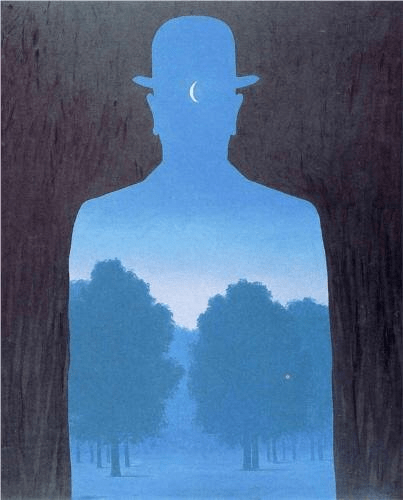
Image: Rene Magritte, A Friend of Order 


Ali Smith’s Autumn: a song for Brexit times

Ali Smith’s Autumn: a song for Brexit times

This novel ticks all the literary establishmentarian boxes: Reactionaries vs Progressives. Cosmopolitanism vs Isolationism. Sexual diversity. Feminism. Millenials against the World. All the trendy stuff. All the relevant, resonant, apt, and timely ingredients of Britain’s first “post-Brexit novel,” written hastily after that fateful referendum the results of which will continue dictating much of the political, economic, and cultural discourse for years to come.

And yet none of the above are reasons for why Autumn is a good novel. In fact, all of the above may become potent deterrents for swathes of potential readership hailing from the other side of the political barricades. We are, after all, damned with rotten luck to live in the age cleft in two throbbing wounds of populism and polarization.

Autumn is good not because of its political regalia. Autumn is good in spite of it. It’s good because of masterful narrative control, because of its intensely intimate third-person style, because of its seemingly effortless sardonic wit served up amongst bursts of genuine kindness, because of free-flowing sentences worthy of Virginia Woolf, because it spins the thread of chronological time like a 90’s kid a yo-yo.

And I haven’t even paid tribute to the core story, a tender friendship between a 30-something art scholar Elisabeth and David, a centenarian with bitter experience of Europe’s darkerst hours. As the latter tumbles from moments of sweet clarity into later-life necrosis and back, the former navigates mundane familiarities of our modern life, with its absurd bureaucracy, housing crisis, uninspired academic advisors and, above it all, the macabre shadow of once-in-a-generation political uncertainty. The historical parallels drawn between the world of Elisabeth and that of David’s continental European youth are so crudely obvious they can probably be seen from space. Yes, we get it, things are bad, thing will likely get worse:

“It is like democracy is a bottle someone can threaten to smash and do a bit of damage with. It has become a time of people saying stuff to each other and none of it actually ever becoming dialogue. It is the end of dialogue.”

And now, for a striking image of obviously Trumpian foreboding:

“All across the country, the country was divided, a fence here, a wall there, a line drawn here, a line crossed there,

a whole new line of fire,

line of battle,

end of the line,

here/there”

Ali Smith builds a cautionary landscape of walls, lines, demarcation, otherness, the full collection of unmistakable warning signs, but if she were to stop at that Autumn would be nothing more than a prettily worded pile of trendy banality.  Smith does one better and offers hope, nesting right there, in our everyday language, in our words, the potency of linguistic creation:

“Language is like poppies. It just takes something to churn the earth round them up, and when it does up come the sleeping words, bright red, fresh, blowing about. Then the seedheads rattle, the seeds fall out. Then there’s even more language waiting to come up.”

Language can make and un-make regimes, empires, civilizations, the entire LEGO set humanity so scrupulously built. What’s one wee Brexit in this grander context. Dandelion fuzz, nothing more. As Daniel the centenarian puts it:

“Whoever makes up the story makes up the world. So always try to welcome people into the home of your story. That’s my suggestion.”

If there’s charm in this little book it is precisely this – finding comfort, stability, and reassurance in eternal, human, and natural things. All political neurosis aside, Autumn is a desperate search for primeval safety in turbulent times.

Image: a graffiti in Bristol, courtesy of Twitter. 

The Inland Sea: an elegy to rural Japan

The Inland Sea: an elegy to rural Japan

In 1971, Donald Richie took his readers on a tenderly wistful journey of Japan’s Inland Sea, unfolding before his audience an intricate tapestry of fishing villages, ritual baths, ubiquitous tea, statuesque babies, sagely grannies, virgin boys and magnetic courtesans. That was not the high-tech robotic Japan of ingenious design and legendary workaholics. Richie’s Japan is that last dip of the proverbial fishing-net, right before the tide recedes, forever condemning all that charm and innocence into macabre depths of merciless Progress. In this respect, The Inland Sea has aged well, painting a traditional landscape of shrines, boats, and seawater, before ambitious new bridges drove the fish and the fishermen away.

In many other respects, however, this book religiously follows classical tropes of a travel narrative through Western eyes. There’s that conventional quest for innocence and wisdom preserved by the superior hearts and enviably alabaster brawn of the “noble savage”. There’s that all-too-familiar fetishisation of all things foreign, and, of course, the good old pilgrimage to “find yourself.” And above it all, there’s palpable desire to flee, to escape, to disappear by all means possible from our complicated, industrial, dehumanizing, and artificial century. The author, in a touching display of sincerity, replicates this attempt at an escape not only from the womb of his civilizational home (Ohio, The West, America, whatever) but also in the context of his marriage. We see his wife popping in toward the end of the book, on a detour from an undoubtedly fascinating journey of her own. We see her through his disinterested eyes, her in all her blondness and tallness and impenetrable disappointment, contrasted with younger distractions sampled by her pilgrim-husband in this village and that… Alas, it’s not even framed as a sad moment. Instead, it’s just another wholly self-contained bead on the necklace of life’s myriad moments. This is where Richie goes Japanese, taking a bite off of that transient verisimilitude, so fundamental to that culture’s understanding of life:

“Reality is skin deep because there is only skin. The ostensible is the truth. There is no crack between the mask and the face because the mask is the only face anyone ever has.”

Well, that ought to make things simple, no? No. This is still a pilgrimage, after all. There is still a purpose, the narrative is still linear because our hero is still a Westerner. No amount of sake can reprogram his settings. He journeys from island to island, admires the quiet beauty of landscapes and the charming indifference with which it is regarded by the lucky souls who call it home. He claims to find peace, here or there, yet it’s always tainted with a delicate note of disappointment, translucent like mountain mist. His pilgrimage won’t be a success, for he is a Ulysses of the Inland Sea. This is no Mediterranean. This is a nearly landlocked body of water, an overgrown lake pretending to be a sea. He will bounce from an island to an island, like a billiard ball hitting the edges of a pool table.  His problems won’t go away, and he won’t find that coveted elixir of life’s eternal happiness. Alas, that’s perfectly alright, and our traveller gracefully accepts the scant embraces of detached resignation. Such distinct aesthetic of “sadness-lite” infuses not merely the narrative (or, rather, the emotional stasis) of the book, but also, quite literally, its very pages. In my edition text is printed in two vertical columns for a “Japanese look,” no doubt.

And then there’s Hiroshima…

Richie takes his reader to the place whose name is heavier than all the tears of the world. And yet, in all this history, legacy, and pain comes a thought that’s quite optimistic:

“This is also one of the facts of death – that one forgets it. One may disapprove of oneself for forgetting, may have wanted to keep the fact green, tended like a grave. It is impossible. Life is too strong. Death loses on every occasion except the last.”

It is life’s inherent strength that penetrates island after island on the silver backs of fish and carves itself into the weathered faces of the fishermen, only to return back to them in the calming glow of a full moon. We feel it too, this dignified strength, all throughout and into the final paragraphs, ending in a particularly lovely image of a grandmother and grandson, their finely chiseled shadows vanishing into the sunset.

Richie ends his labour of love saying he doesn’t care if he never goes back (to the States, presumably, not Japan). Many call this book an elegy, even an epitaph to the lost world of rural Japan. I, for one, wonder how many more elegies will pop up within the travel fiction genre as mass tourism and its insufferable practitioners (aka pretty much all of us) pollute the magic of this world’s most beloved treasures with our own ambitious pilgrimages.

Image: a 16th century European map of Japan.