Author: Epigraph

A Man Called Ove: an ode to curmudgeons and a handbook to love

A Man Called Ove: an ode to curmudgeons and a handbook to love

The first sentence in Fredrik Backman’s A Man Called Ove is “Ove is fifty-nine.” The last sentence is “Saab.” That laconically epitomizes this Scandinavian superhit tearjerker, as saccharine a novel as can be. That’s a compliment, by the way. From the first page to the last, I read it with the widest grin on my face, so wide that even the comatose fellow train commuters kept noticing, half-awake in their uncomfortable slumber, naughtily peeking over my shoulder to catch a glimpse of the page that elicited grins too inappropriately happy for a 7 am commuter train.

Anyway, presenting our chess pieces:

There’s Ove, a textbook Grumpy Old Man, complete with his love of hard work, dedication, loyalty, insert every imaginable virtue here, and visceral hate of foreign cars (hence the importance of Saab, a sturdy, made-in-Sweden symbol of all these virtues, popping up with somewhat mathematical consistency across the book).

There’s also Parvaneh, a vivacious and pregnant Iranian neighbour of Ove’s. A fiery concoction of maternal wisdom and daughterly naïveté, Parvaneh comes along with a lanky IT consultant-husband who’s rubbish at house repairs, cars, and all things requiring manual labour, and two obviously adorable daughters.

Other characters, primarily neighbours of a fairly cookie cutter suburb, complete the chessboard: an app developer with weight issues, a gay barista, two Audi-driving D.I.N.K.s, an elderly couple headed by Ove’s former arch-nemesis/best friend, and, finally, a very dog-like feline christened Cat Annoyance.

The board is set, and now we play, peeling off the complex layers of Ove one by one, unveiling this adorable cabbage of a personality, so representative of his Baby Boomer generation, and yet so preciously unique in his own humanity. Ove the builder, Ove the train machinist, Ove the husband, Ove the menace of his homeowner’s association, Ove the orphan…

Granted, the plot is fairly predicable in numerous instances, but that in no way diminishes the oodles of love that envelop the reader, like a thick blanket on a wintry night. That’s what this book is all about: finding love in unlikeliest of places, finding meaning and even happiness in simple, everyday acts of kindness, finding friendship and loyalty among complete strangers who share naught but a frozen driveway.

Love thrives in this book like a plant that’s been cared for by a nurturing hand. It shows that even after the greatest loss, even when one has already compiled a well-researched morbid catalogue of the many ways to leave the mortal coil, it’s still rather surprisingly feasible to keep on shoveling the snow and feeding the cat and giving someone driving lessons, fully submitting your tired, wounded soul to the humble beauty of routines. And then, sometime after the most densely inpenetrable darkness, it’s also feasible to suddenly find yourself surprised at not being in a terrible hurry to leave this world anymore… And later still, in the midst of all the hapless neighbours that need you to run errands for them and to secretly love them in the way their absent parents never will, then, in that serene moment at a kids’ birthday party, you suddenly forget that you were even planning to ever leave. And so you go on living, you go on staying…

Just don’t ever forget that Saab is the best car in the entire world.

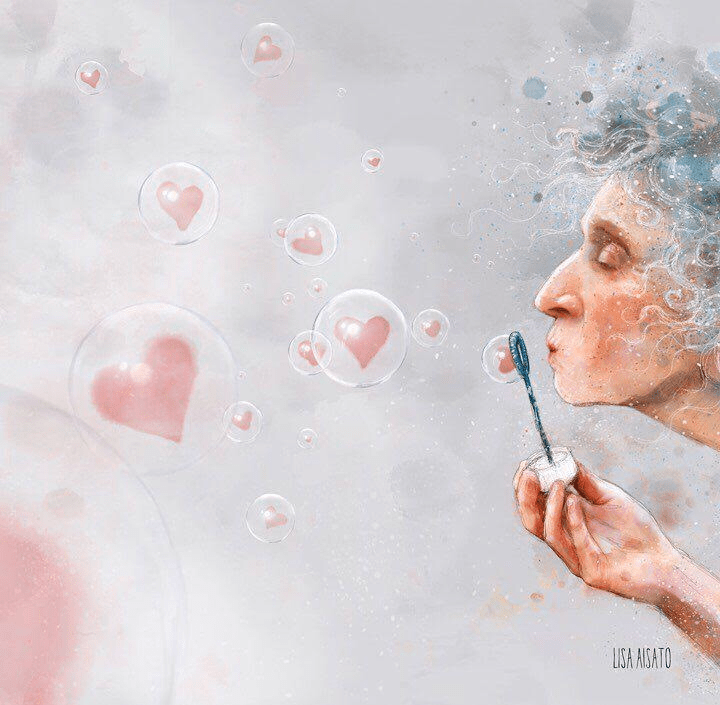
Image by the talented Norwegian illustrator Lisa Aisato. 

On Stefan Zweig, the Soul of Europe

On Stefan Zweig, the Soul of Europe

“You see? There are still faint glimmers of civilization left in this barbaric slaughterhouse that was once known as humanity.”

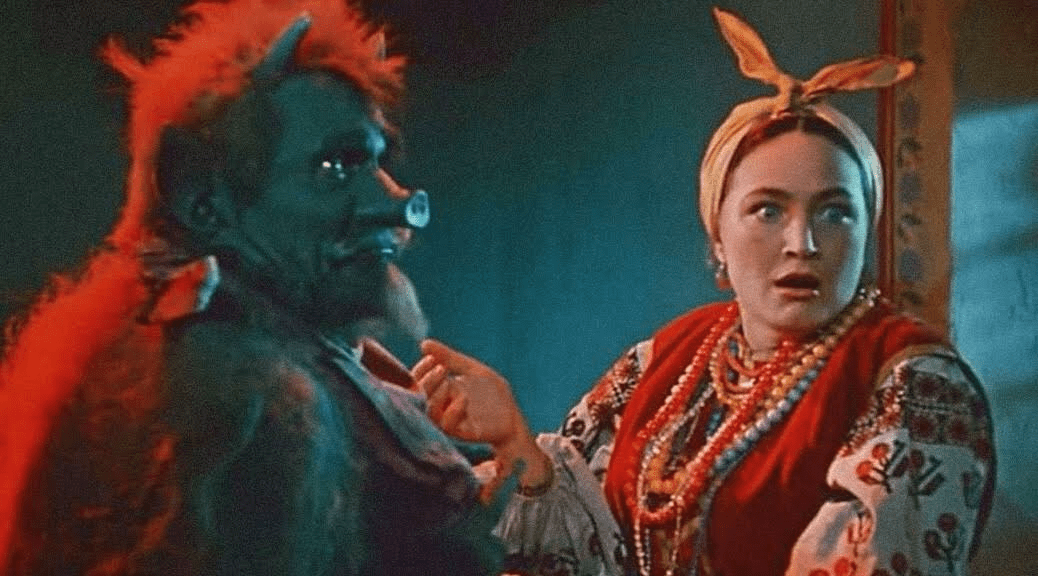
These juicy musings are not to be found in Stefan Zweig’s opulent literary oeuvres. They belong to Wes Anderson’s adorably melancholy bon vivant Gustave H., the gentle connoisseur of life under the velvet curtains of Grand Budapest Hotel. It’s an institution, the Hotel and the film itself, inspired by the immortal works of Stefan Zweig, as is carefully noted in the film’s credits. Anderson pays tribute to an Auteur (much like himself, of course), a historiographer, a novelist, an essayist, the most popular and celebrated literary superstar of the first half of 20th century. Back then Zweig’s name was on the lips of everyone, from the stuffy halls of his darling Vienna, to the roaring bowels of literary Paris (Britain, I think, was the only notable geographic exception. Ever the Brexiteers, then as now).

Zweig’s luxuriously opulent writing style is akin to the fluffiest profiteroles gently melting on the tip of one’s tongue. Zweig takes any subject, time period, or historical persona, and delivers delicious page-long paragraphs of philigreed prose, so overwhelmingly, shockingly beautiful that you might catch yourself re-reading some suave little phrase depicting Casanova’s syphilitic wounds or Nietzsche’s migraines countless times, delighting in the sheer beauty and grace of the nouns, verbs, and adjectives laid out before you on the page. Such skill and beauty could bring tyrants to their knees. Alas… Zweig’s books failed to charm that one particular tyrant of his age, Hitler, and so his books, among other literary diamonds and other, smaller gems, were sentenced to be burned at the stake, in those infamous book burning barbarities of the nazi epoch.

So why is Zweig the soul of Europe? Surely, not just because of his literary calisthenics?

Focusing on Zweig’s essays (his short stories and biographies of famous people deserve a separate discussion), it’s apparent that his great hope for a united, supranational Europe, his incessant belief in humanity’s potential, is always tainted with insurmountable sadness and fatherly disappointment with the sorry state of affairs in this rabid, galloping, sleepless world. After the unparalleled disaster of the First World War Zweig wonders: this time around, when the storm clouds gather, when the war trumpets sound again, will Europe destroy itself completely?

Zweig is the faithful guardian of the three thousand year old treasure chest of European civilization. He serenades its culture and argues with passion that Europe’s most brilliant epochs were when it allowed for a free exchange of people and ideas. The liberal genius of the Renaissance, he muses, was killed off by the competitive isolationism of Reformation, much like the glorious openness of Rome was laid waste by the fratricidal squabbles of the Dark Ages.

Zweig marvels at all that the people of the continent were able to achieve, this glimmering Tower of Babel, now lying half-in-ruins, half-abandoned, the grand construction halted on account of petty nationalist fervour eating away, like rust, at its foundations.

“This is the monstrous moment we are living through today. The new Tower of Babel, the great monument to the spiritual unity of Europe, lies in decay, its workers have lost their way. Still its battlements stand, still its invisible blocks loom over a world in disarray, but without the communal effort to keep the work going it will be entirely forgotten, just like the other in the time of myths.”

In this and his many other essays written after the First World War and just as the tanks and the boots were being polished for the Second, Zweig calls for, essentially, the European Union, a supranational entity where people are free to move around and collaborate, a potent antidote to future wars, a golden crown fit for this reverend continent to wear. He speaks of Europe where a Slovakian worker and a Norwegian fisher would partake in a lively exchange of ideas, in a kind of a socialist conference, where good thoughts are as plentiful as canapés or shrimp cocktails. It is through the free flow of ideas (and goods and services, of course) that the soul of Europe could finally be chiseled out of its beautiful yet lifeless torso. But hurry, Zweig cautions, hurry to muster that courage, that spirit, that will, for the hellmouth of war is about to open once again. And here we see Anderson’s Gustave H wagging his Ralph Fiennes alabaster finger and blasting that memorable bit about the “slaughterhouse of humanity…”

The parallels with political, social, philosophical, and economic dilemma plaguing Europe today are blatantly obvious. What do we have on the menu today? Eurofatigue, euroskepticism, Brexit, assorted ultra-right characters, the migrant crisis, Putin’s dead eyes, and a nasty gut feeling of something wicked on the horizon. The socio-political air smells of gunpowder, and only a barely palpable veil of ignorance masked as respectability parts us from something awful.

Zweig did not survive that darkest hour and killed himself in 1942 in Brazil, where he fled earlier, bidding a sad adieu to his European motherland. In his infinite sadness, he just narrowly missed the hopeful turn of the tide with the Americans joining in the war efforts. He also missed the Marshall Plan and the founding of the EU. I cannot help but think he would have become some kind of an official EU arts dignitary, a Mozart of Brussels bureaucrats, the Eternal Euro-Optimist, the Classical Globalist with a gorgeous writing style…

In his essay History as a Poetess, Zweig describes history as “the workshop of God,” where dates and figures are only made meaningful by the poetic authority of those who transmit them:

“History only lives where it achieves a certain poetic grandeur, which is why the highest accomplishment of a people is to transform as much of its national history into world history as possible, its private people’s myth into a world myth.”

This view of history is that very “faint glimmer of civilization” our friend Gustave H speaks of in the film, right before he gets punched in the face by a throng of Nazi-esque police-thugs. And so the best of humanity, like Gustave, like Zweig, like countless others across continents, tirelessly labour on turning their little myths into the heritage of the world, dismantling walls, stretching out hands, and re-building that proverbial Tower of Babel.

I leave you with Zweig’s best essays:

  1. The Sleepless World
  2. The Tower of Babel
  3. History as a Poetess
  4. European Thought in Its Historical Development
  5. The Unification of Europe
  6. In This Dark Hour

Image: a still from The Grand Budapest Hotel, 2014

Notable Children’s Authors Unbeknownst to the Anglosphere. Part 3.

Notable Children’s Authors Unbeknownst to the Anglosphere. Part 3.

Epigraph's avatarEpigraph.

As I am typing out these words (on a touchscreen keyboard, no less! Woe betide all couch potato writers too lazy to replace their iPad keyboard batteries), my thoughts frantically scatter over the numerous giants of children’s literary thought that deserve opulent praise and thorough study. That’s Michael Ende and his Jim Button stories; that’s Croatia’s Ivana Brlic Mazuranic and the Brave Adventures of Hlapic the Aprentice; that’s Bozena Nemcova and her Grandmother or the deliciously enchanting Three Nuts for Cinderella. These are all masterpieces in their own right, bedazzled with awards, commemorative stamps, monuments, and feature films produced in their honour.

I’d like, however, to allot the remaining two slots on my list to the proverbial dark horses: one, a Soviet “variation on the theme of” to L. Frank Baum’s The Wonderful Wizard of Oz. The other is a fantasy classic that, in my opinion, asks…

View original post 700 more words

Hildegard Von Bingen: the hippy nun and her cosmic eggs

Hildegard Von Bingen: the hippy nun and her cosmic eggs

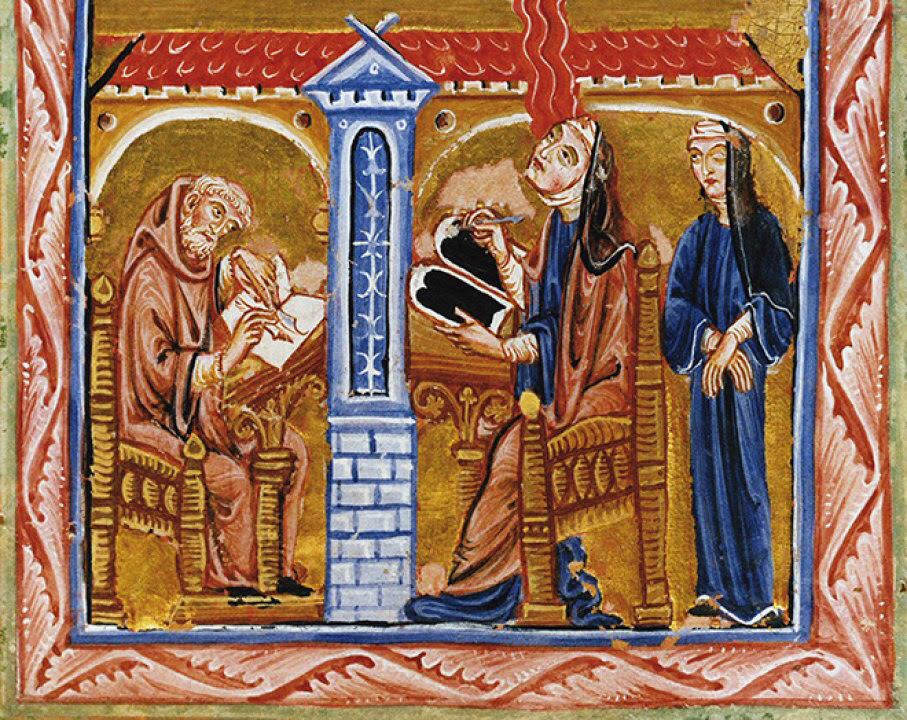
“I, the Living Light who illumines what is obscure, have placed the human being whom I have willed, and whom I have wonderfully afflicted as it pleased me, in the midsts of wonderful things, beyond the reach of human beings in the past, who did see in Me many hidden things; but I have laid her low on the ground, so that she may not set herself up in any boldness of mind.”

The above is from Von Bingen’s Scivias, her seminal work, a collection of her famous visions, a supreme theological work and a key to Hildegard’s 12th century superstardom. She was a woman of many talents, glorified and catalogued ad nauseam by theologians, literary critics, psychologists, historians, feminists, wellness practitioners, musicians, and even doctors. Yes, she touched upon all those multidisciplinary endeavours throughout her uncommonly long life span of 80 years, secluded comfortably in a monastery in Germany. She spent most of her life there, a fiery shepherdess to fifty odd nuns, apart from the time she spent on tour. Yes, she has speaking tours, impressing upon the clergy and the laity the phenomenal world of her visions. And what visions! Cosmic eggs, gigantic humanoids seated atop mountains, assorted animals writhing in apocalyptic tropes, and much more, hardly fit for this humble blog to list. And music, of course. Hildegard wrote absolutely ethereal music usually performed by a crystal-thin soprano to the accompaniment of other sopranos, an auditory splendour stemming from utterly original composition rules, each musical piece a holistic and self-sustained ecosystem, so different from the stale rigour of Antiphons and Responsories.

She did all these incredible things (even by our hyper-over-achiever standard measure), yet she wasn’t even classically trained in the contemporary trivium or Latin. That hasn’t stopped her from becoming a thought leader du jour and having bishops, emperors, and even the pope take note of her opinions on theology, politics, philosophy, and other critical matters.

Many odes can be sung to Hildegard, but what is truly remarkable in her work is the freshness, simplicity, and harmony in which she contextualizes her beliefs. Everything for her is steeped in greenness, veridity, fertility, growth, and bloom. Everything is natural and of God. There is little room for asceticism, self-denial, and piety. Instead, moderation, balance, and enjoyment are crowned as the very nexus of good life. Life itself is of interest to Hildegard, and not merely as a means to a glorious end surrounded by rosy-cheeked cherubs, but rather as a thing in of itself. She writes with equal joy about the End of Days as she does about the medicinal properties of gemstones or of putting a dead mouse into a bucket of water to heal epilepsy. Nothing is beyond her reach; everything is firmly and securely a sacred part of her world. At times, she sounds definitely New Agey, her life-affirming positivity resonating strongly with the type of philosophy that’s popular today in the West, bubbling in conversations over kombucha after a hot yoga class. This, in part, explains her enduring popularity in academia and beyond.

Modern neurological commentary explains Hildegard’s visions as an effect of her migraines as much of today’s discourse still wastes precious time debating whether her experiences were real or a hoax. Who cares. What’s infinitely more interesting is the love, divine and human, that permeates every sentence of her opus. And even as her metaphor of a cosmic egg foresees great troubles ahead as the end of time mirrors the sharp end of the egg, there is a kind of joyful acceptance of it all. Hildegard urges her audience not to worry themselves as much with what will be (hell, devils, bodies of sinners writhing in giant cauldrons) as with what is (the music of the firmament, the perpetual growing, breathing, pulsating Life).

Here endeth the lesson.